Tuesday, January 23, 2007 at 7 p.m.
Tuesday, January 23, 2007 at 7 p.m.
|
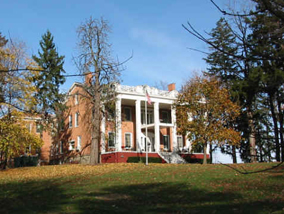
Friends of Stanford Home and preservationists: For people who are going to make statements at the Tuesday Public Hearing, below are some points to consider in your statements. They are offered by one of our researchers. For those who just are going to join us to support our preservation efforts, we certainly welcome everyone to come and cheer us on. It is very critical to show these five Town Board Members that there indeed is a lot of support to keep the land and mansion as it is. Your body counts. We will make a body count for the record. Bring it and your good mind to help. 7 p.m. on Tuesday, January 23. Send this on to people whom you think might want some activity other than watching the US President’s State of the Union presentation. We all have a right to state opinions on something so beautiful and so a part of what we like to see in our communities of upstate New York. Linda Champagne —– Original Message —– Hi all, Highbridge’s revised Environmental Assessment Form (EAF) shows that they will need the following New York State Permits: NYSDOT for curb-cuts and NYSDEC for a SPDES permit for Stormwater Discharge. For the proposed project, DEC considers it a minor project. Nevertheless, the SPDES website would seem to indicate that it would trigger a review by SHPO. The website states: SHPO describes its role as: “Under Section 106 of the National Historic Preservation Act and Section 14.09 of the New York State Historic Preservation Act, the SHPO’s role in the review process is to ensure that effects or impacts on eligible or listed properties are considered and avoided or mitigated during the project planning process.” The problem I see is that, because the DEC as far as the SPDES permit is concerned, considers it a minor project, the applicant is not required to send a Structural and Archaeological Assessment Form (SAAF) with their application. Hence, how will the DEC know that this is a historic site? If the DEC relies on the EAF they will not make the referral. The EAF form only asks if the site contains a building on the State or National Register of Historic Places. The EAF does state that the site includes a view known to be important to the community. On a DEC Program Policy report titled Assessing and Mitigating Visual Impacts, it states that in the review of an application for a permit, Department staff must evaluate the potential for adverse visual and aesthetic impacts. The policy paper also states that unlisted aesthetic resources include a property on or eligible for inclusion in the National or State Register of Historic Places. I think we should push for such an assessment. One concern is that this white paper states that in 1999 the Legislature eliminated the requirement that DEC staff testify with regard to local jurisdiction needs. This change was related to the placement of power plants. I am not sure what this means to our situation, but it should be checked out. Alex do you know an expert in this area. On a related matter, SHPO will advise local communities on local preservation environmental reviews, upon request, under the provisions of the State Environmental Quality Review Act. This review would be a help to Niskayuna. I would like to suggest a few action items: 1) Notify the DOT and the DEC as to the historic nature of the Ingersoll site, and push the state agencies to bring in SHPO to perform a site review. More than one person may have to write a letter. I would hate to see a permit approved without the proper referral. I fear that Ingersoll will fall through the cracks. 2) Find out if the DEC will due a Visual Assessment of the proposed shopping center on the historic Stanford Home. Such an analysis is quite involved. I am sure that the current plan would have an adverse impact on the current site’s aesthetics. 3) As part of the SEQRA and the EIS, residents should press the town to due a visual assessment study. There is actual a set procedure for conducting such a study. The advantage of bring it up now is that it will pressure the town to conduct this study even if the state won’t. The argument to conduct a study is clear. Highbridge has proposed leaving the house and building around it, and the question is, how much harm the proposed project will have on the historic building. The visual assessment will provide one measure of the shopping centers impact. It will also show the town board that more studies must be done and an EIS should be required. 4) Finally residents should suggest that SHPO be asked by the town to due an analysis of the property. Such a request is appropriate given the nature of the project and the goal of SEQRA. For steps 3 and 4, the more residents that request such actions on Tuesday, the better. |