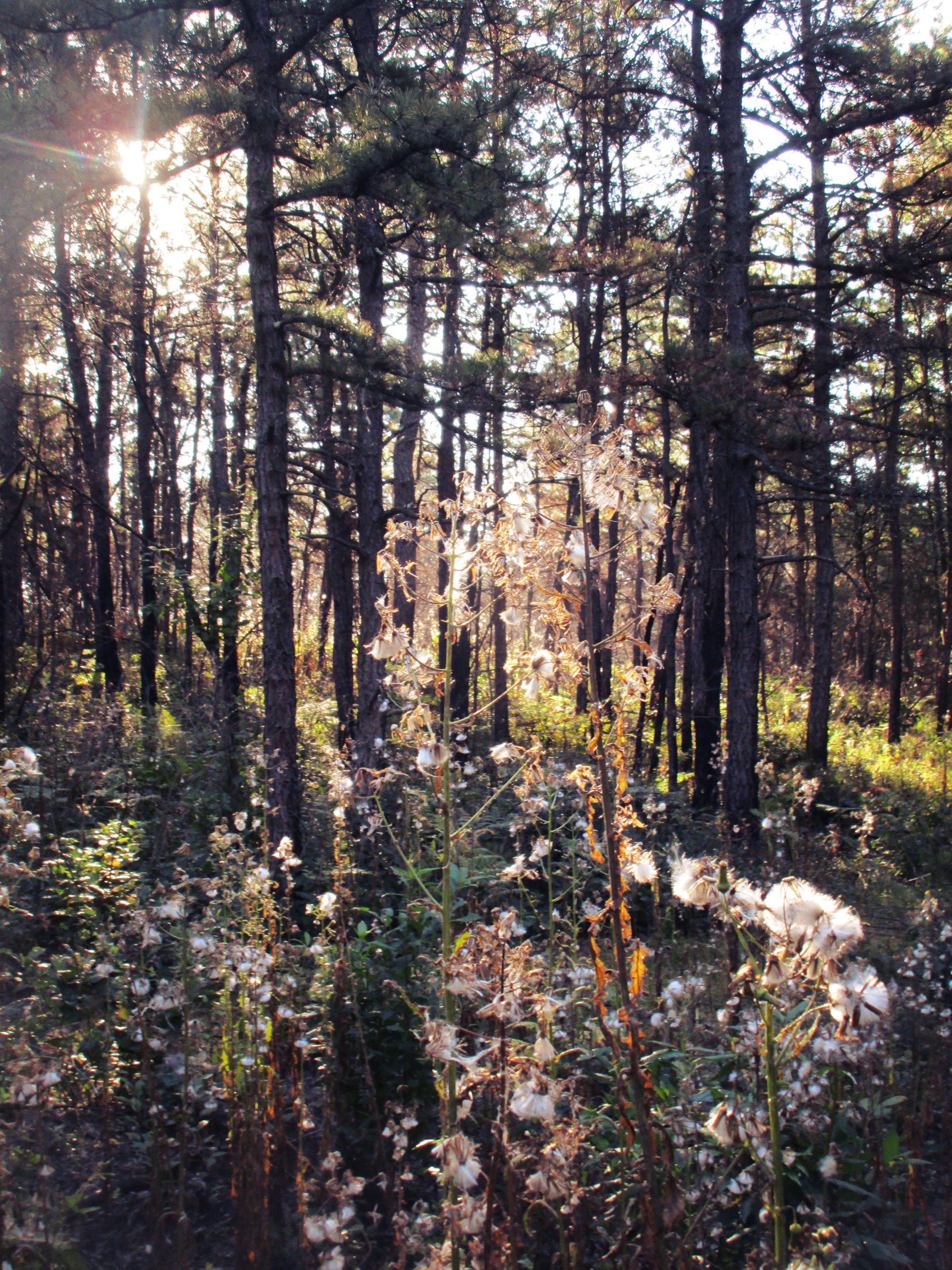
ALBANY: Neil Gifford, Conservation Director of the Albany Pine Bush Preserve Commission, gave a powerpoint presentation to the attendees of the September vegetarian lasagna dinner at the First Presbyterian Church on the new 2002 Pine Bush Management Plan.
State Law requires the Albany Pine Bush Preserve Commission (the Commission) to review its management plan every five years, and prepare a new one if needed. The Commission released a new management plan in April, 2002. This new plan replaces the Implementation Guidelines, published in 1996, and the original Management Plan, published in 1993. The Implementation Guidelines were written by the Commission in response to Save the Pine Bush’s lawsuit over the inadequacy of its original 1993 plan.
The presentation Neil prepared for Save the Pine Bush was the same presentation that Neil has made to the Guilderland and Colonie Planning Boards. All the local municipalities in which the Pine Bush is located has representatives from the municipalities including Albany, Guilderland and Colonie. Municipalities are required to notify the Commission when developments in the Pine Bush study area are proposed. The Commission can then supply comments about how such developments will affect the Pine Bush.
Neil started by briefly highlighting the significance of the Pine Bush, though he knows we are quite familiar with this. He stated that there are 19 rare plants and animals, and that the Pine Bush is located on glacial sands. Other butterflies, besides the well-known Karner Blue, feed on the blue lupine, including the persius duskywing and frosted elfin.
Noting that the Pine Bush was once from 25,000 to 60,000 acres in size, there are only about 5,000 to 6,000 acres of the ecosystem remaining, 2940 of those acres are in the Preserve, the remainder privately held.
Neil showed two dramatic slides, air photographs comparing land use in 1940 to land use in 1990. Not only has the Pine Bush ecosytem become significantly smaller during these 50 years, but the type of plant communities has changed.
No presentation of the Pine Bush would be complete if the Karner Blue butterfly was not mentioned. Listed on the NYS register in 1978, and the Federal register in 1992, the Karner Blue has greatly declined over its historic range from New Hampshire to the mid-west. New York’s capital region remains the eastern most site of the Karner Blues, as the New Hampshire population in Concord became extinct two summers ago.
The cause of decline of the Pine Bush ecosystem are habitat destruction and fragmentation by developments; fire exclusion; and invasive plants, which are a biological pollution and silent killer.
Invasive species such as the black locust change the soil composition and completely alter the environment, making the surrounding area even more suitable for invasive species. Non-native birds spread the seeds of invasive species.
Environmental Conservation Law, Article 46, which created the Commission, states, “The Pine Bush is a landscape of rare and endangered natural communities and species.”
The goal of the Commission in its current management plan is to protect and manage a viable Pine Bush preserve of 4,610 acres. Currently the Preserve contains 2,940 acres. The Commission will reach these goals by protecting and managing linkage between Preserve parcels, protect and manage buffers, protect and manage significant environmental resources, such as the Karner Blue butterfly, including working with the Federal Plan to recover the butterfly, manage and enhance public access to the Pine Bush and education.
The Federal Karner Blue Butterfly Recovery Plan will be completed by December 31, 2002. Currently, the plan’s goals are full recovery of the Karner Blue in 20 years in 13 areas. New York is the eastern stronghold of the Karner Blue. The plan proposes to protect and expand current sites, link existing sites, and create new sites. Recovery will be considered successful at a specific site if the population of the Karner Blue is 3,000 individuals each year for a five-year period, without the population falling below 1500 individuals.
Karner Blue populations in eastern New York are found in the Pine Bush, in the Saratoga Sands Plains (the Saratoga Airport), and the Queensbury Sand Plains.
Neil spoke about practical reasons why Planning Board members should be interested in saving the Pine Bush. The ecological value of the Pine Bush includes biodiversity, clean air (the Pine Bush is a huge oxygen pump), and a source of clean water. The Pine Bush has value as a recreation area. The Pine Bush is a great educational resource. With the coming of the Pine Bush Discovery Center, educational opportunities in the Pine Bush will expand.
‘The Pine Bush is an incredible asset,” said Neil. “No one else has this in their backyards.”
Neil then turned to describe the Commission’s role in review of projects in the Pine Bush study area. In the new 2002 Management Plan, the Commission ranks all of the undeveloped land which is not in the Preserve. An analysis is made of each parcel. Some parcels received a higher ranking in this plan than in the 1996 Implementation Guidelines, due to the discovery of Karner Blue sites.
The Commission has some tools for balancing development and conservation. Native plant landscaping of developments, which is now available, keeps down the number of invasive species in the Pine Bush. Changing exterior lighting to lights invisible to amphibians and insects disturb these native animals and insects less. Easements, set-asides and mitigation fees are also used..
Printed in the October/November 2002 Newsletter