It’s a tale that could end up on a milk carton. Tender youngsters are snatched from their cradles and carried off to underground lairs, never to be seen again.
“The one thing we know is that the Karner Blue Butterfly eggs are disappearing,” said Dr. Peter Spoor, speaking at the SPB lasagna dinner on May 24, 1990. “I think they are being taken by ants, but at this point that’s just conjecture. It’s not very scientific.”
He also reports discovering half-eggs that are not shells discarded by newborn caterpillars. “They appear to have been eaten, perhaps by ants.”
Dr. Spoor, along with his students, hopes to collect 20 pairs of mating butterflies and encourage them to lay eggs on specific blue lupine plants. If he finds enough volunteers, he will set up a 24 hour watch to see what happens to the eggs. Of course, the eggs may simply be detaching from the leaves and rolling into the sand. In that case he will have black cloth on the ground around the plants with sticky traps to catch the eggs if they fall. In preliminary studies he found that rabbits would often nibble the blue lupine that he was watching, so it will be necessary to surround the plants with netting.
At the Crossgates Mall site where he is working, Dr. Spoor reports that the number of eggs and larva that he could find were few. “This may be hard to believe,” he said, “but if they are there, I can find them. I don’t think they are hiding.” He saw very little evidence of feeding by the caterpillars, which leave characteristic little round holes in the leaves which don’t seem to affect the overall health of the plant. Most alarming, however, was that in the three days prior to his talk, he could only find three larva on the site.
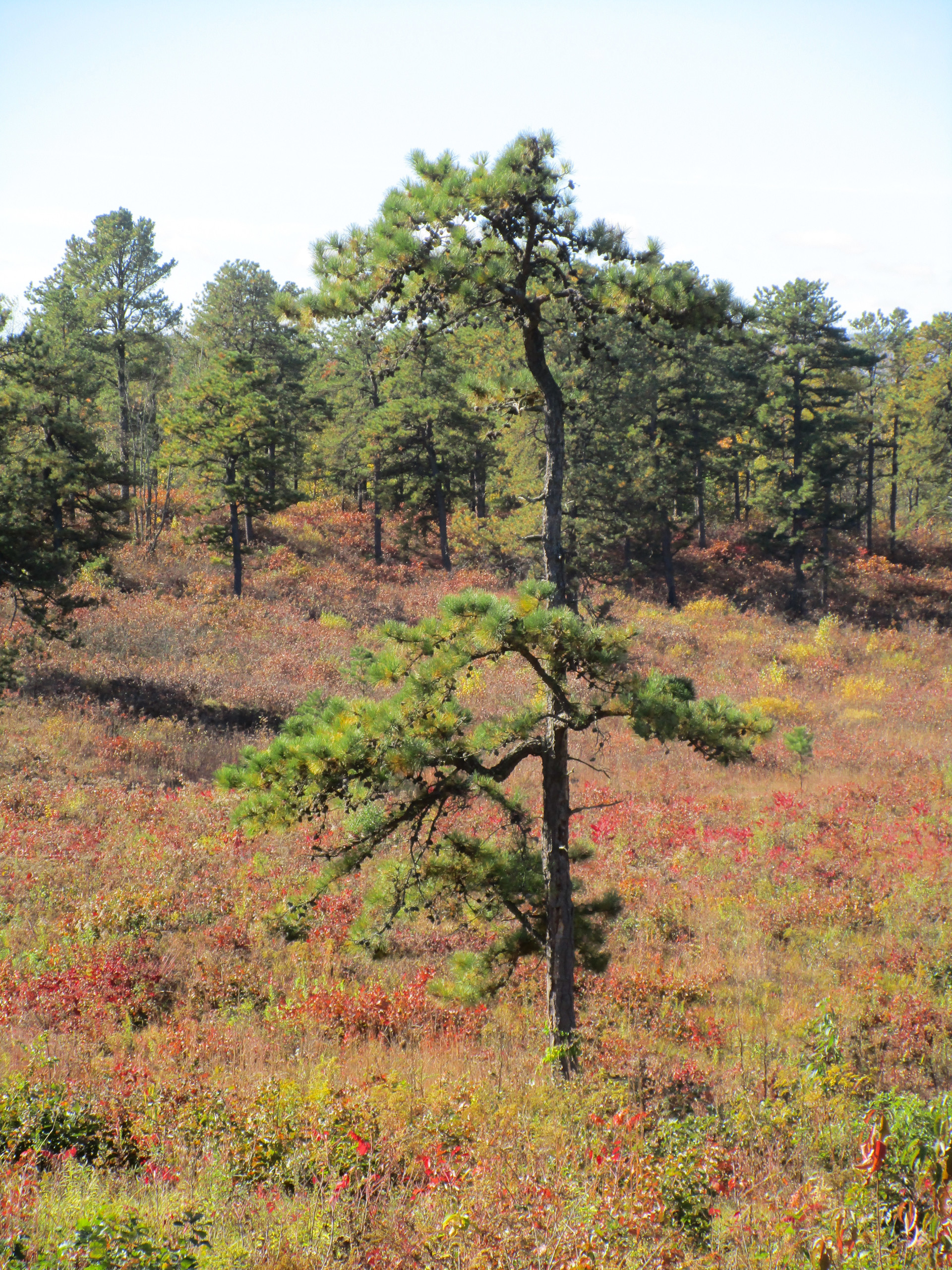
If Dr. Spoor’s conjecture proves correct by this study, then ants may be the butterfly’s #1 predator (after developers and politicians, that is). The other problem is the decline in numbers of blue lupine plants due to overgrowth of the underbrush in the Pine Bush, which in turn is due to lack of fires. In answer to a question about planting blue lupine to encourage butterflies to reproduce, Dr. Spoor pointed out that he had recently planted some 100 wild seeds, and only 5 or 6 plants grew to maturity. Apparently this has much to do with the unique composition of the soil in the Pine Bush, to which the native blue lupine is adapted. The plants which grew, however, were successfully transplanted to the wild. He made it clear that despite the well-meaning efforts of some homeowners, the lupine that is available commercially is a hybrid that the butterflies ignore.
Dr. Spoor’s presentation included a slide presentation on the life cycle of the Karner Blue. The butterflies themselves live only for a week, only to mate and lay eggs. The eggs laid in June will hatch in one week, and the larva will take until late July to become butterflies. This August brood will lay eggs that will remain on the lupine leaves until next April, when they will hatch.