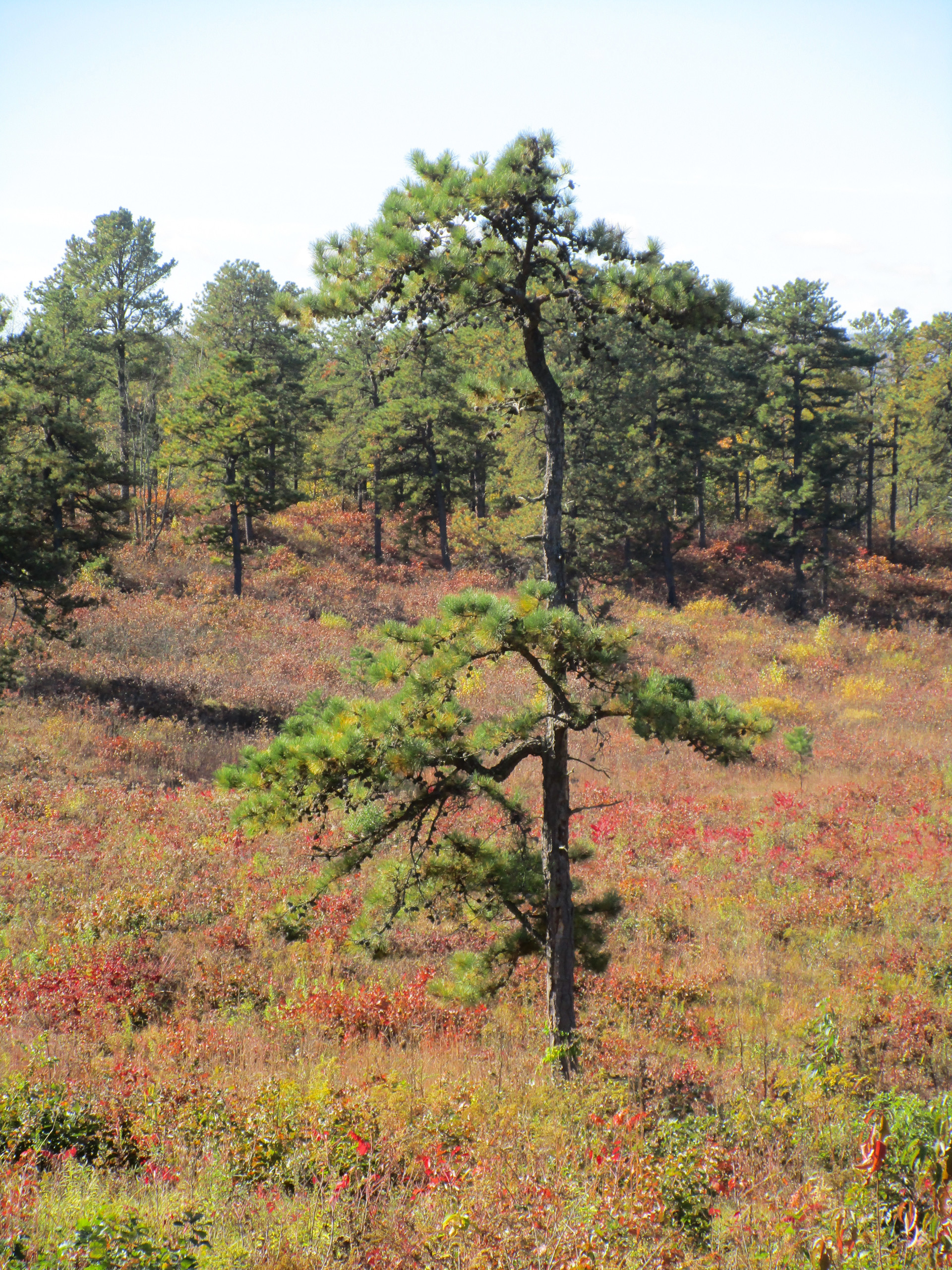
"Man has disrupted the natural order in the Pine Bush with roads, developments and suppression of fires," said Stephanie Gebauer at the December Save the Pine Bush dinner. Ms. Gebauer, the first director of the Albany Pine Bush Preserve Research and Management of the Eastern New York Chapter of The Nature Conservancy, went on to describe how fires benefit the Pine Bush.
Fires used to occur in the Pine Bush every five to ten to fifteen years. Particularly since the 1940’s, fires have not been allowed to burn. The Pine Bush is one of the many varieties of fire-adapted ecosystems throughout the U.S. Native Americans used fires to increase food crops and for other reasons, but after Europeans settled here, fires started only by accident either by lightening or actions of people.
The Pine Bush landscape, with scrub oak and sparsely dotted with pitch pine, is characterized by large, grassy, sandy-soiled open areas, home of the blue lupine and the Karner Blue. The grassy areas are very dry , especially in spring and fall but also in winter. Dry grass ignites easily. Fire helps the pitch pine to release its seeds. Ash is rich in nutrients and helps plants to rejuvenate. Pitch pines send out sprouts from their trunks. Scrub Oak and dwarf chestnut oak sprout abundantly after a fire. Blue lupines require sunny, open spaces. The decline of the blue lupine may well be the result of the absence of fire and the decline of the Karner Blue butterfly many well be the result of the decline of the blue lupine.
The Buck Moth lays eggs on young oak branches. While fire kills some shrubs, after a fire regeneration produces lots of young sprouts for the Buck Moth eggs to live on.
The Pine Bush has changed and continues to change, but, in spite of development, it is the lack of fires which has been the primary reason for so much change. "Weedy species " such as the aspen and black locust have invaded and even become dominant in some parts of the Pine Bush.
It takes a lot of planning and site preparation for controlled burns. Weather conditions – humidity, temperature, wind – are important considerations. Fire breaks, mowed paths two to four meters wide, are being prepared delineating small test plots of three to four acres each in the Blueberry Hill area (the site of the defeated Karner Meadows sub-division) and two five-to-six acre areas off Rapp Road. In late March or early April twenty-four acres will be burned. Information on vegetation types, smoke patterns, flame heights and the areas’ response to fire will be observed. This data will help determine future burns.
It may be necessary, after the burns, to remove and clip trees mechanically to help the lupines. It would be nice to let naturally-occurring fires burn but it is unlikely to happen. The effort will be made to simulate naturally-occurring fires as much as possible.
Each small burn should take about one-half day – a total this spring of three to four days. The goal is up to 200 acres per year, so that all of the Pine Bush will be burned every ten to twelve years. The continuing management of the Pine Bush is going to be funded out of tipping fees collected from the Albany landfill temporary expansion. The City of Albany is assisting The Nature Conservancy in preparing and beginning the controlled burn project with funds from the money given to the City by Crossgates. Back to Role of Fire in the Pine Bush Index